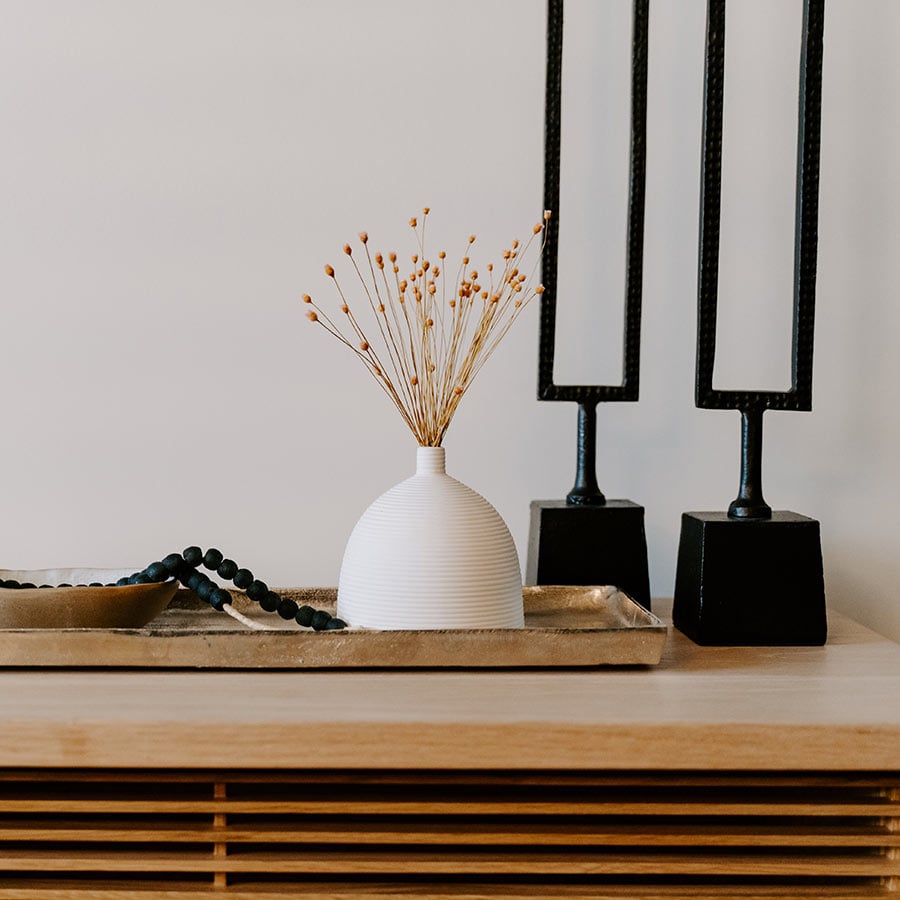
When most people say they want a modern home they do not actually mean what that word technically describes. True modernism in interior design is a specific historical movement with strict principles around minimalism, functionalism, and the complete elimination of ornament. Very few people actually want to live in that kind of space when they see it in person. Cold floors, bare walls, no softness anywhere.
What people mean when they say modern is usually something closer to this: a home that feels current without feeling trendy, clean without feeling sterile, and put together without looking like it required a professional to achieve. That version of modern is genuinely achievable and it is what this article is actually about.
The Modern Aesthetic in 2026 Is Warmer Than It Used to Be
Something shifted in interior design over the last few years that is worth naming clearly. The cold grey and white minimalism that defined mainstream modern interiors through most of the 2010s has given way to something warmer and considerably more livable.
Warm neutral palettes have replaced cool grey ones. Terracotta, warm white, sand, camel, and deep earthy browns appear where stark white and concrete grey used to dominate. Natural materials have moved to the center of the aesthetic. Wood grain is visible and celebrated rather than hidden under paint or lacquer. Linen and cotton sit where synthetic fabrics used to. Stone appears on surfaces where polished marble was the only acceptable option a decade ago.
The result is a version of modern design that still reads as current and intentional but feels considerably more comfortable to actually live in. Rooms that photograph well and also feel genuinely good to spend an evening in. That combination is harder to achieve than either one alone and it is where the most interesting modern interiors sit right now.
Start With the Walls and the Light
The decisions that have the most effect on whether a room reads as modern are made before any furniture is chosen. Wall color and lighting are the foundation and getting them right makes everything that comes after easier.
Warm white is the modern wall color that works most reliably across a range of styles and natural light conditions. Not the blue-toned bright white that was everywhere ten years ago but a white with a slight warmth in its undertone, cream, off white, or a white with a hint of yellow or pink that makes the room feel inhabited rather than clinical. This kind of white reads clean and modern without the coldness that pure bright white introduces.
If you want to add more color the approach that works best in modern interiors is a single deeper shade used on one wall or in one room rather than multiple colors competing across a space. Deep green, warm navy, burnt terracotta, and rich caramel all work well as accent colors that feel contemporary without dating quickly.
Lighting in modern interiors does the most work of any element in the room and it is consistently underinvested in. The mistake most people make is relying on a single overhead light source in each room. Modern interiors layer light from multiple sources at different heights. A ceiling fixture for general illumination, floor lamps or table lamps for ambient warmth, task lighting for specific areas of use. The difference between a room lit from one overhead source and the same room lit from three lower sources at different heights is dramatic and immediately noticeable.
Furniture That Has a Reason to Be There
Modern interiors are characterized by furniture that earns its place. Not minimalism for its own sake but a deliberate quality to the selection, where every piece was chosen for a reason rather than accumulated because there was space for it.
The furniture silhouettes that read as modern in 2026 tend toward clean lines without being rigid. Slightly curved sofas rather than perfectly square ones. Rounded coffee tables rather than sharp-cornered rectangles. Dining chairs with a subtle shape rather than completely straight backs. The rigidity of earlier modernism has softened into forms that are still clean but have a human quality to them.
Solid wood appears consistently in modern interiors right now and it is worth distinguishing between the different ways it gets used. Light oak and ash read as Scandinavian influenced and work well in rooms with warm whites and linen. Darker walnut and teak read as warmer and more grounded and work well with deeper color palettes and richer textiles. The natural grain should be visible in both cases. A heavily lacquered finish that hides the wood character undermines the whole reason for using solid wood in the first place.
Scale matters enormously in modern interiors and it is the element most often got wrong by people decorating without professional help. A sofa that is too small for a living room makes the room feel unsettled regardless of how well chosen it is. A dining table that crowds a room makes every meal feel slightly claustrophobic. Measure before you buy and be honest about what your space can actually hold rather than what you wish it could.
Texture Is Doing the Work Color Used to Do
One of the most reliable techniques in modern interior design right now is using variation in texture to create visual interest without introducing multiple colors. A room that stays within a warm neutral palette can feel rich and layered or flat and boring depending entirely on how much texture variation exists across its surfaces.
The combinations that work best start with a foundation of smooth surfaces, painted walls, a flat weave rug, a simple sofa in a plain fabric, and then introduce contrast through textured additions. A chunky knit throw. A rattan side table. A ceramic lamp base with a visible throwing texture. Linen curtains that pool slightly at the floor. A rough hewn wooden bowl on a coffee table.
Each of these additions creates a surface that catches light differently from the surfaces around it and that difference is what gives the room its visual depth. You are not decorating with color. You are decorating with light interaction.
This approach also has the practical advantage of aging well. A room built on texture variation within a neutral palette does not go out of date the way a room built around a particular color trend does. The bones of it remain relevant for years while individual pieces can be swapped and updated without the whole space needing to be reconsidered.
Plants Are Not Optional
This might be the single most consistent finding across modern interior design right now. Rooms with plants in them feel fundamentally more alive than rooms without them and the difference is not subtle once you have lived with plants in your home for a while.
The practical point is not that every modern interior needs a jungle of plants. It is that a few well placed plants, sized correctly for their positions, do more for the feeling of a modern interior than many more expensive purchases. A large fiddle leaf fig or a mature monstera in a floor pot commands a corner of a living room in a way that a piece of furniture simply cannot. A collection of smaller plants on a kitchen windowsill brings life to a surface that otherwise just holds functional objects.
The container matters as much as the plant. A ceramic pot with visible texture. A simple terracotta. A concrete planter with a rough finish. The container becomes part of the overall material story of the room rather than just a vessel.
The Details That Make the Difference
The final layer of a modern interior is the one where most people run out of energy or budget and it is genuinely worth not rushing past it. Hardware, handles, switches, taps, door handles, the small metal and ceramic elements that appear on every surface of a home, all read as part of the overall aesthetic even though most people would struggle to name them specifically.
Brushed brass and matte black are the hardware finishes that read as most contemporary right now and both work across a range of color palettes and material combinations. The consistent rule is to pick one and use it throughout rather than mixing multiple finishes across a room. Consistency in hardware is one of those things that looks effortless but requires a deliberate decision when choosing it.
Artwork is the element of modern interiors that most people approach with the most anxiety and the least confidence. The practical advice that actually works is simpler than most people expect. One larger piece does more for a wall than several smaller pieces arranged in a gallery. Abstract work in colors that echo what is already in the room reads as intentional without being matchy. And a piece you genuinely respond to emotionally will serve a room better over time than a piece you chose because it seemed appropriate for the space.
The Honest Summary
Modern home decor in 2026 is warmer, more textural, and more human than the version of modern that dominated a decade ago. The cold minimalism has given way to something that still reads as current and considered but feels considerably more comfortable to actually live in.
Getting it right requires more attention to foundations than most people expect. Wall color and lighting set the stage for everything else. Furniture chosen for proportion and purpose rather than trend. Texture used deliberately to create depth within a restrained palette. Plants that bring life into the space. Hardware and details that are consistent rather than varied.
None of this requires a large budget or a professional interior designer. It requires honest decisions made in the right order, starting with the walls and light and working outward from there. The rooms that feel most successfully modern are almost always the ones where those foundational decisions were made carefully before anything was purchased for them.