My first apartment had a sofa, a coffee table, and a rug that I bought from the same place in the same afternoon. They matched perfectly. The room looked exactly like the display it came from. Exactly. Every time I walked into it I felt like I was visiting a furniture store rather than coming home.
That experience taught me something I have not forgotten since. Matching is not the same as interesting. A room where everything coordinates too perfectly ends up belonging to no one. It is pleasant the way a hotel lobby is pleasant, which is to say not particularly pleasant at all once you have been sitting in it for two hours.
The rooms that actually feel worth spending time in are the ones where someone made real decisions. Specific decisions. The kind that say something about the person living there rather than about the collection they bought from. Here is what that looks like in practice.
Buy From More Than One Place
This sounds obvious but almost nobody does it and the rooms that result from not doing it look almost identical to each other regardless of which retailer provided everything.
When every piece in a room comes from the same source they carry the same design language, the same material quality level, and the same implicit aesthetic logic. They coordinate so completely that the room has no tension in it at all. No contrast. Nothing for the eye to move between with any real interest.
The rooms people remember are almost always built from things that came from different places and different moments. A sofa bought new from a contemporary brand. A coffee table found at an estate sale with a surface that has clearly been used for years. A rug from a craft market that nobody else has because it was made by hand and there is no other one exactly like it. A lamp from a charity shop that cost almost nothing and reads as though it cost considerably more.
These things create contrast and contrast creates interest. It is that simple and that difficult simultaneously.
Old Things Do Something New Things Cannot
I bought a wooden chair at a house clearance sale about four years ago. The paint on it is chipped in three places. The seat has a mark I cannot explain and have stopped trying to. It cost me twelve dollars.
It is the most commented on piece of furniture in my home. People who come over notice it immediately. Not because it is beautiful in a conventional way but because it is clearly old and clearly lived in and in a room of mostly newer things it stands out with a presence that an equivalent new chair simply would not have.
Age does something to objects that design cannot replicate. It gives them a visible history. You can see that this thing existed before you owned it and was used by people whose names you do not know. That history registers in a room even when nobody in the room could articulate what they are responding to.
Finding old pieces does not require expensive antique dealers. Estate sales, house clearances, online secondhand platforms, and flea markets all produce genuinely old furniture at prices that are often lower than new equivalents. What you need when you find something is an honest look at its structure rather than its surface. Chipped paint and worn surfaces are fine. Wobbly joints and warped frames are not worth taking home regardless of how good the piece looks from a distance.
One Unexpected Material Changes Everything
Every room has a dominant material logic. The bedroom is soft. The kitchen is hard. The living room is warm. The thing that makes a room feel genuinely distinctive is often the introduction of a single material that does not obviously belong to that logic but finds a way to work within it anyway.
A concrete bowl on a warm wooden kitchen counter. A rough stone object on a sleek contemporary shelf. A piece of raw linen draped over a polished metal rail. An industrial metal stool at a traditional wooden table. These combinations create a visual friction that is interesting rather than wrong when the proportions and colors are handled well.
The reason this works is that unexpected materials give the eye something to stop on and consider. A room where every surface material is predictable is one where the eye moves through quickly and retains very little. A room with one genuinely surprising material is one where the eye slows down and the room starts to feel more considered than it might otherwise.
Put Your Own Life on the Walls
The most genuinely unique home decor available to anyone is the stuff that comes from their own life rather than from a shop. And almost nobody displays it well.
Travel photographs sitting on a phone. Objects from meaningful trips in a drawer somewhere. Books behind cabinet doors so the room looks tidier. Inherited things in boxes in a cupboard because there is no obvious place for them.
All of these are things that could only exist in your specific home because they come from your specific life. A shop cannot sell them. A trend cannot produce them. And when they are displayed thoughtfully they create a quality of particularity in a room that no purchased item can replicate.
The challenge is display rather than acquisition. Not everything from your life deserves a shelf. The objects worth displaying are the ones that are both meaningful and visually interesting, or at minimum one of those two things strongly enough to carry the other. Everything else stays in the drawer.
A gallery wall of personal photographs done right is one of the most powerful unique home decor choices available to anyone. The difference between done right and done poorly comes down almost entirely to consistency in frame color or material and honesty about spacing. Too close together and the wall feels anxious. Too far apart and the arrangement loses coherence. A consistent frame finish throughout and even spacing between frames produces something that reads as deliberate rather than assembled.
Make a Decision With Paint
Most people treat paint as a background choice. The thing you sort out before the real decorating starts and then stop thinking about. The rooms that feel most singular often treat paint as an active decorating element in its own right.
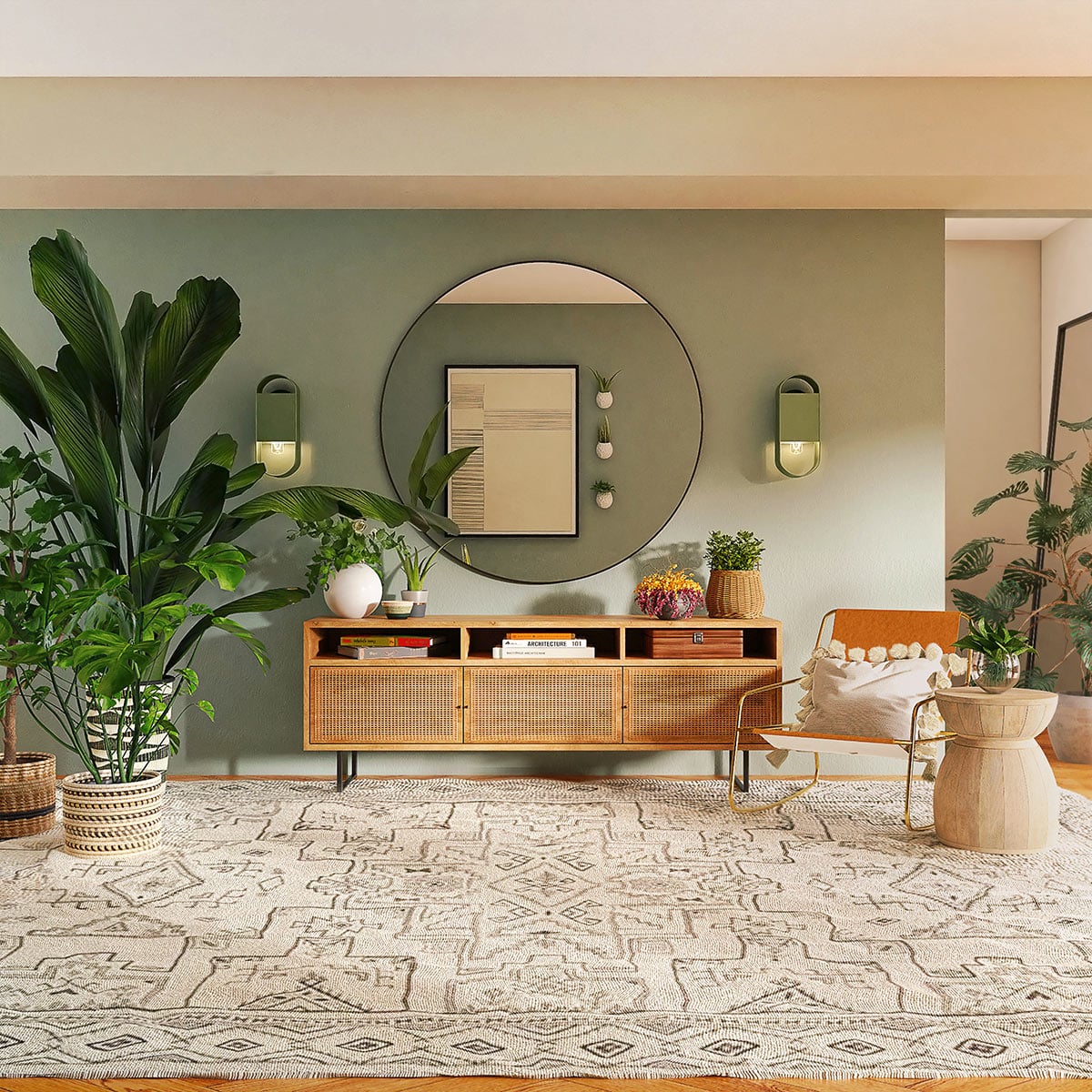
A single wall in a deep color while the others stay neutral transforms how a room reads without requiring a single additional purchase. The colors that work best as single wall statements are the ones that feel genuinely committed rather than cautious. Deep olive green. Warm terracotta. Rich navy. Dusty plum. These colors on one wall of a room with warm white on the others produce a focal point that anchors the space in a way that no piece of furniture achieves as efficiently.
The most underused paint decision in most homes is the ceiling. A ceiling in a slightly deeper or warmer tone than the walls makes a room feel more considered and more intimate without affecting natural light as much as most people fear. A dark ceiling in a room with pale walls reads as genuinely sophisticated. It is the kind of decision that makes people pause when they walk into a room without necessarily knowing why.
Light From More Than One Direction
A room with a single overhead light source looks flat. The same room lit from three sources at different heights looks warm and considered. This is one of the most reliable improvements available to any space and it costs less than most people assume.
Mismatched table lamps that share a bulb warmth and a shade material read as eclectic rather than unfinished. A floor lamp in a corner that was previously unlit changes the whole sense of a room’s depth. A pendant light over a dining table makes the table feel more significant and the meals eaten at it feel more like occasions.
The bulb temperature is the detail worth getting right first. Bulbs around 2700 Kelvin produce the warm light that makes a room feel genuinely domestic. Cooler bulbs produce a light that reads as a waiting room regardless of what else is in the space.
Something Living
The advice to add plants gets repeated so often that it starts to sound like filler. It keeps getting repeated because it keeps being true and most people still under-implement it.
A healthy plant in the right position does something for a room that no purchased object fully replicates. It changes over time. It grows. It responds to seasons and light in ways that static objects do not. A large plant in a floor planter commands a corner of a room with a presence that is alive rather than inert and that difference is felt immediately.
The container is as important as the plant. A plant in a plastic nursery pot reads as temporary. The same plant in a ceramic with visible texture or a simple terracotta becomes part of the room’s material story rather than something waiting to be properly placed.
The Honest Version of This Advice
Unique home decor is not a product category. It is the result of a series of decisions made with genuine intention rather than with the goal of following the safest available option.
It comes from mixing things that came from different places and different moments. From giving old objects space alongside new ones. From displaying the things that actually come from your life rather than only the things that came from a shop. From making a committed decision with paint or a light source rather than defaulting to what requires the least thought.
None of this costs more than the alternative. Most of it costs considerably less. The rooms that feel genuinely worth spending time in are almost always the ones where someone made honest choices rather than careful ones. That is available to anyone willing to make them.