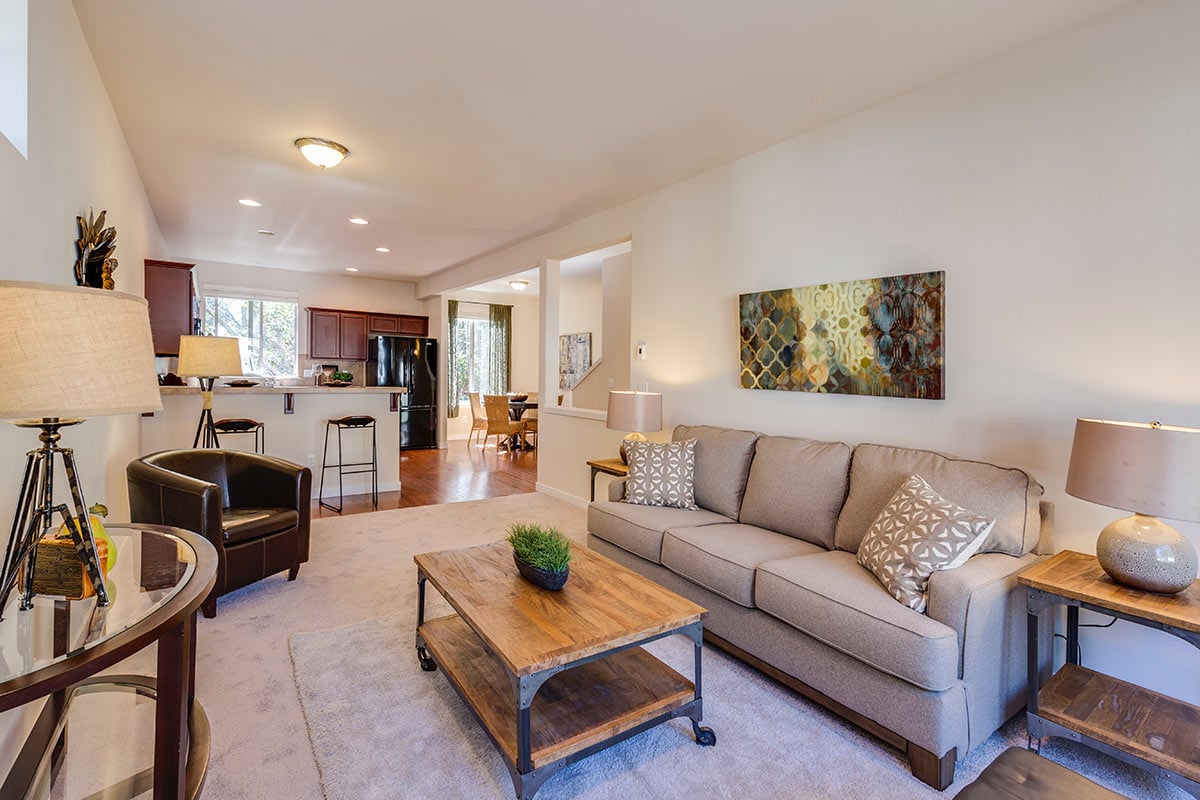

There was a hotel in Porto. Nothing famous, not even particularly expensive by hotel standards, but the room stopped me cold when I walked in. I actually put my bag down in the doorway and just looked at it for a minute.
It wasn’t big. It wasn’t full of expensive things — or at least, nothing that screamed expensive the way some hotel rooms do, all gilded furniture and aggressively shiny surfaces. It was just… right. The lamp on the bedside table threw a warm circle of light. The curtains were heavy and hung perfectly straight. The rug had a texture I kept walking on in bare feet. There was a single piece of art on the wall that I actually wanted to look at.
I took photos of the room before I even unpacked. Not for Instagram. Just because I wanted to remember what it felt like.
Coming home to my flat afterwards was a bit deflating, honestly. Same space I’d always had. Same stuff. But now I had a reference point for what a room could feel like when someone had actually thought carefully about every single element in it.
That trip started a long process of figuring out what luxury actually means in a home — not the magazine version, all marble and chandeliers, but the version that makes you feel something when you walk into a room. These are the luxury home decor ideas I’ve gathered, tested, kept, and genuinely believe in.
Luxury Isn’t Expensive. It’s Considered.
This took me a while to really absorb because the word ‘luxury’ drags a lot of price-tag associations with it. But the most luxurious spaces I’ve been in — and I’ve been in a few, through work and travel — share almost nothing in common with spaces that are simply expensive.
Expensive rooms have things that cost a lot. Luxurious rooms feel a certain way. The difference is intention.
I’ve been in hotel suites that cost hundreds of pounds a night and felt like walking into a furniture showroom — beautiful objects, no warmth, nowhere to actually be comfortable. And I’ve been in relatively modest homes where someone had spent real time thinking about scale, light, texture and material — and those rooms felt genuinely special.
The principle I’ve landed on: luxury in a home comes from removing compromise. Not buying the most expensive version of everything, but refusing to settle for things that are wrong — wrong scale, wrong material, wrong light, wrong placement. Every element that’s right adds to the feeling. Every element that’s compromised chips away at it.
That’s actually an achievable thing. It takes time and patience more than money. It means waiting for the right piece rather than filling a gap with whatever fits the budget right now. But it’s genuinely within reach for most spaces.
The Materials You Choose Do More Work Than Anything Else
I had a faux-leather sofa for four years. Dark grey, perfectly functional, not offensive to look at. But there was something about it that kept the room feeling a bit… temporary. Like a waiting room that was trying its best.
Replacing it with a real fabric sofa — a deep boucle in a warm off-white — changed the room more than every other change I’d made combined. Not because boucle is fashionable (it is, but that’s not the point) but because the material has real texture, real depth, real presence. It looks different in morning light than it does in lamplight. You want to touch it. It rewards being in the room with it.
Real materials do this. Faux materials don’t, or at least not in the same way. The difference between a wool rug and a polypropylene one isn’t just durability — it’s the way the room feels underfoot, the way light moves across it, the way it ages. Polypropylene looks fine in a photo. Wool looks fine for fifteen years.
This extends to everything — curtain fabric, cushion covers, the material of your coffee table, the finish on your hardware. Brass that’s actually brass versus brass-coloured plastic. Marble that’s actually stone versus marble-effect vinyl. Linen that drapes with real weight versus polyester that holds its shape too stiffly.
You don’t have to change everything at once. But when something needs replacing, choose the real version even if it costs more and takes longer to save for. The room will tell you it was worth it.
Curtains: The Thing Most People Get Completely Wrong
This is the one I wish someone had told me ten years ago.
Most homes have curtains that are too short, too thin, and hung too low. It’s not an insult — it’s just how most curtains are sold, and most people don’t know to question it. But wrong curtains make a room look smaller, cheaper, and less finished than almost any other single element.
The rules that transformed my rooms:
Hang the pole high — as close to the ceiling as possible, not just above the window frame. This makes the ceiling feel higher and the room feel taller. It’s one of the oldest tricks in interior design and it genuinely works every time.
Let them pool slightly on the floor, or at least touch it. Curtains that hover above the floor look accidental. Curtains that reach or slightly exceed the floor look deliberate, which is another word for luxurious.
Get them wide enough to cover more wall than just the window. When drawn, they should frame the window generously, not just cover it. This makes windows look bigger and the room feel more considered.
And the fabric — heavy linen, velvet, thick cotton — makes an enormous difference to how a room sounds as well as looks. Heavy curtains absorb sound. They make a room quieter. That quiet is a big part of what makes a space feel genuinely luxurious rather than just styled.
Scent Is Underrated and I Won’t Apologise For Saying That
The first thing you notice in a room you love is rarely something you can photograph.
I became aware of this properly on the Porto trip. The hotel room smelled of something — I still couldn’t tell you exactly what, something woody and faintly sweet — and it was part of why the room felt so settled and complete. It had a smell that matched how it looked.
Scent is one of the fastest routes to atmosphere. Not air freshener — that signals covering something up rather than adding something. A diffuser with a good quality oil, or a well-made candle with a proper fragrance (not synthetic-sweet, something more complex), changes the character of a room in a way that’s hard to explain until you’ve experienced it.
My living room currently has a sandalwood and cedarwood diffuser going most evenings. My bedroom uses a lavender and vetiver candle an hour before sleep. Neither is expensive. Both do something to the room that I notice immediately when it’s absent.
It’s the sensory element of luxury that most home decor advice skips entirely because you can’t show it in a flat image. But it’s real, and it’s worth taking seriously.
One Genuinely Good Piece of Art Changes a Room’s Whole Register
For years I had prints from high-street shops in frames from the same high-street shops. Inoffensive. Decorative in the most functional sense. They filled wall space the way a placeholder fills a blank document — they were there so nothing was absent, not because they meant anything.
The first time I spent real money on a piece of art — an original print from a local artist, not huge, not wildly expensive but more than I’d ever spent on something for a wall — I was nervous about it for about two days. Then it went up and I understood immediately.
A piece you chose because you actually responded to it does something to a room that a chosen-for-size, chosen-for-colour piece never does. It gives the room a point of view. It suggests someone lives there who has taste rather than just adequate wallspace.
You don’t need a lot. One piece per room that you genuinely love is worth more than six pieces you chose to match the sofa. And original doesn’t have to mean expensive — open editions from independent artists, limited prints, even well-framed photographs you’ve taken yourself can all achieve this. The criterion is that it means something to you, not that it cost a certain amount.
The Hardware and Handles You Ignore Are Quietly Ruining Your Rooms
This is the detail that separates rooms that feel finished from rooms that almost feel finished.
Door handles, cabinet hardware, tap fittings, light switch covers, curtain pole finials — these are the things most people never replace because they came with the house or the furniture and changing them feels fiddly and unnecessary. But they’re visible in every room, every day, and they have a finish and a quality that your eye registers even when your brain doesn’t consciously notice it.
I replaced the handles on my kitchen cabinets. Cheap chrome originals from the fitted kitchen, replaced with solid brass bar pulls. The kitchen looks ten years more expensive. It took an afternoon and cost about sixty pounds in total.
Same principle applies to light switches (brushed brass or nickel instead of white plastic), bathroom taps (if you’re doing any work anyway, the upgrade to a better finish is worth it), and curtain hardware (a decent pole in real metal reads completely differently to a white-painted MDF one).
These are not glamorous changes. Nobody photographs their light switches. But the accumulation of getting these details right is a lot of what makes a room feel genuinely well-done rather than almost well-done.
Investing in the Right Pieces — Where Craftsmanship Actually Shows
After years of buying furniture that was fine and then replacing it, I’ve become completely convinced that a smaller number of genuinely well-made pieces is the right approach — not just aesthetically but practically.
A solid wood dining table built properly by someone who knows what they’re doing will look better in twenty years than it does today. The grain deepens. The patina develops. The wood moves and settles and becomes specific to your home in a way that mass-produced furniture never does.
I’ve found that the places worth going for this kind of thing are small makers and craftsmen rather than big retailers. People who make furniture the way it used to be made — properly jointed, real materials, built to last. The team at HomeCrafted are a good example of what I mean: the work is honest and built to outlast the trend cycle entirely.
The luxury isn’t in the price tag. It’s in the fact that the piece was made by someone who cared how it turned out. You feel that. Rooms feel it too.
Layering Your Lighting Is Not Optional If You Want the Room to Feel Right
I keep coming back to this because it keeps being the thing that makes the most difference and gets the least attention.
A room lit only from the ceiling is a room that looks like a room. A room lit from multiple sources — table lamps, floor lamps, wall lighting, candles on an evening — is a room that looks like somewhere you’d actually choose to be.
The goal is pools of light rather than even illumination. Dark corners in a well-lit room aren’t a failure — they’re depth. They make the lit areas feel warmer and more intentional by contrast.
Bulb temperature matters a lot here. Warm white (2700K to 3000K) for living areas and bedrooms. Not daylight bulbs, which are efficient but clinical. The warmth of the light affects how every colour in the room reads — a warm bulb makes neutrals glow, makes wood look richer, makes fabric textures more visible.
The people who write about interiors at HomeDwellio cover this kind of layered approach to decorating in real depth — worth reading if you want to go further than what I’ve touched on here.
Honest Answers to Questions I Had When I Started
How do I make a room look expensive without spending a lot?
Curtains hung high and long, a proper lamp (not overhead lighting alone), one genuine material somewhere in the room — a wool cushion, a real wood piece, a linen throw — and surfaces cleared of anything that doesn’t earn its place. These four things together change how a room reads more than almost anything else, and none of them requires a significant budget.
I keep buying things and my room still doesn’t look right. What’s happening?
Usually one of two things. Either the room has too much in it already and new things are adding to noise rather than improving anything — in which case removal is more useful than addition. Or the room has elements that are fundamentally wrong — scale, light, curtain length — that no amount of decorative objects will fix. Those structural things have to be addressed first.
Is it worth hiring an interior designer?
For some people, absolutely. A good designer will spot things you’ve stopped seeing and make decisions faster because they’re not emotionally attached to anything in the room. If you have a budget for it and have spent months feeling stuck, it’s worth a one-off consultation at minimum. But most of what makes a space feel luxurious is learnable. It just takes time and the willingness to look honestly at what isn’t working.
What’s the one thing you’d do first in a room that needs help?
Fix the lighting. Always lighting first. It affects how every other element in the room looks and it’s one of the more reversible changes — if a lamp doesn’t work, it moves to another room. A floor lamp in a dark corner, a table lamp at a lower level than the ceiling, even a string of warm lights in the right place — the difference in how the room feels in the evening will be immediate and significant.
How do I choose art I won’t get tired of?
Buy things you already had a genuine reaction to, not things you think you should like or things you bought because they matched your colour scheme. Art chosen to match a sofa fades into the background within a week. Art you chose because something about it stopped you tends to keep offering you something new every time you look at it. If you’re not sure, live with a print of it for a while before committing to an original.
What’s the biggest mistake people make with luxury home decor?
Trying to do too much at once and ending up with a room that’s busy rather than considered. Luxury in a home context is almost always about restraint — fewer things, better things, more carefully placed. The impulse when a room doesn’t feel right is to add something. Usually the room needs you to remove something instead.
The Room I Want to Come Home To
I think about the Porto hotel room sometimes when I’m making decisions about my flat. Not to recreate it — that would be strange, living in something that belongs to somewhere else — but to use the feeling of it as a reference point.
What made it feel the way it felt wasn’t any single element. It was all of them being right at the same time. The lamp, the curtains, the rug, the art, the smell, the quiet. Nothing compromised, nothing accidental, nothing there just because it had always been there.
That’s the standard I’m working toward. I’m not there yet, honestly. There’s still a light fitting in my hallway I keep meaning to replace and a rug in the spare room that I’ve never loved but haven’t dealt with. It’s a process.
But room by room, piece by piece, getting the elements right — that’s what luxury home decor ideas actually mean in practice. Not a magazine shoot. Not a budget that most people don’t have. Just a slower, more considered approach to making a home that actually feels like somewhere worth being.
That’s something anyone can work toward. It just takes longer than one shopping trip and more honesty than most of us are used to applying to our own spaces.