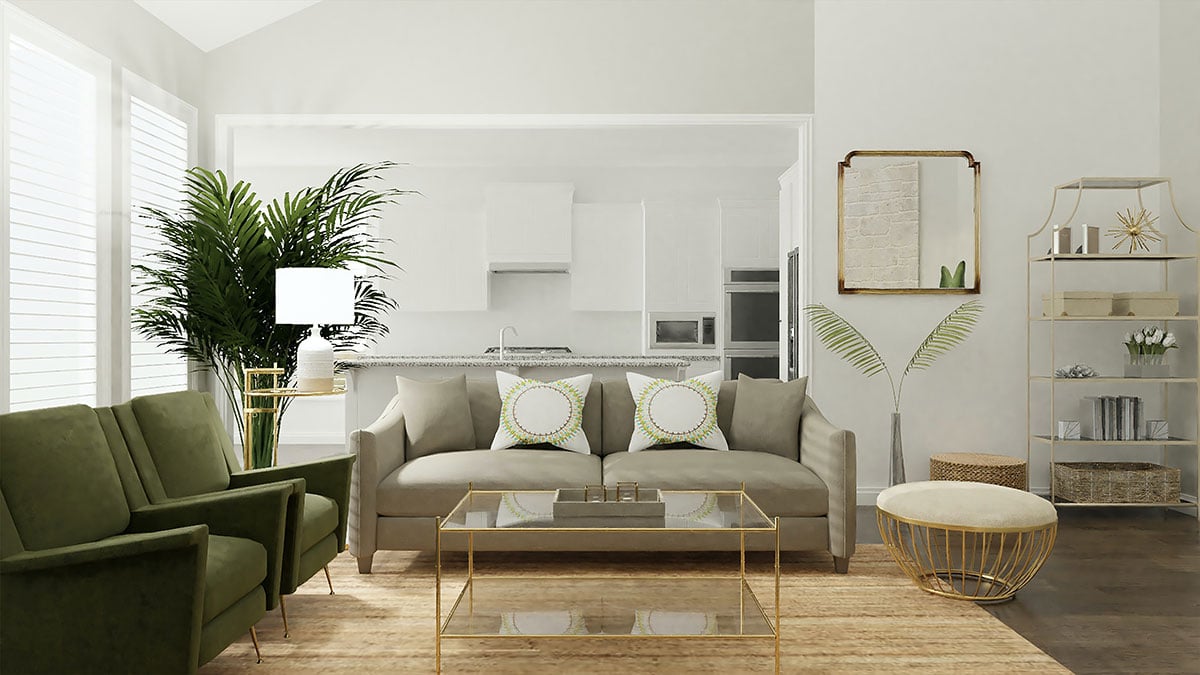

Let me just say upfront — I wasn’t someone who cared much about interior design. My approach for the first few years of living alone was basically: if it fits, it stays. Charity shop find? In it goes. Free lamp from a mate who was moving? Absolutely. Leftover plates from my parents’ kitchen that didn’t match anything I owned? Sure, why not.
By the time I was thirty, my flat looked like a very confused storage unit that someone was also sleeping in. Not dirty. Just… full. Too full. And I’d stopped inviting people over because I was quietly embarrassed by it.
A colleague of mine has this incredibly calm flat. Same size as mine, roughly. Same building even. But walking into it feels completely different — like the room is actually glad you showed up. I asked her what she’d done. She shrugged and said, ‘I just stopped keeping things I didn’t need.’
That was it. No designer. No big renovation. Just a decision to stop holding onto stuff.
I went home and looked at my living room with completely different eyes. And I started from scratch — not by buying anything new, but by taking almost everything out.
The Part Nobody Mentions: You Have to Remove Stuff First
Every article I’d read about minimalist decorating told me what to buy. New neutral cushions. A statement plant. A linen throw. Concrete bookends. Whatever.
But my problem wasn’t that I lacked the right objects. My problem was that I had too many wrong ones. Buying more things on top of the existing pile was never going to work — it would just make the pile look more expensive.
So the first weekend I spent not shopping, but removing. I pulled everything off the shelves and put it on the floor. Then I went through it piece by piece and asked one question: does this actually earn its place, or is it just here because it’s always been here?
A lot of things failed that test. A little ceramic hedgehog I’d owned since university and had genuinely never thought about once. Three photo frames — not photos I’d chosen to display, just frames I’d bought because they were on sale. A stack of coasters from places I’d visited, none of which I ever actually used because they lived in a drawer.
Two bin bags went to the charity shop. One box went into the loft for a ‘try living without it for a month’ experiment. About half of that box is still up there. I don’t miss any of it.
The shelf, with a third of what it had before, looked ten times better. I hadn’t bought a single new thing.
Colour Is Where I Got It Wrong for Years
My living room used to have a dark teal sofa, an orange rug I’d bought on impulse in a sale, mustard yellow cushions, and curtains that were technically cream but had a pink undertone. Every single piece was fine on its own. Together they were arguing constantly.
Switching to a neutral base colour was the most uncomfortable decision I made because it felt boring before I did it. Grey walls. Off-white shelving. A greige sofa that I took three weeks to commit to because I was convinced I’d hate it.
I was wrong. Within a week I understood what all the fuss was about.
When the base of the room stops competing with itself, the things you put in it suddenly get to breathe. My one remaining plant — a big fiddle leaf fig in a terracotta pot — became a feature rather than just another object in a crowded room. A small framed print I’d owned for years but could never find a good place for finally had somewhere to land.
The trick, I’ve learned, is texture. Neutral doesn’t mean flat if you’re layering different materials. A chunky knit throw and a smooth velvet cushion can both be exactly the same shade of oatmeal and still look interesting next to each other because the surfaces catch light differently. Same with a rough linen curtain next to a painted plaster wall — same palette, different character entirely.
I kept one colour in the room. Muted green. One ceramic pot, one small vase. That’s it. It works because everything else gives it room to exist.
I Owned Too Much Furniture for the Size of My Room
This one hurt to admit because furniture is expensive and getting rid of it feels wasteful.
I had a sofa, an armchair, a coffee table, a side table, a TV unit, and a tall bookshelf — all in a room that was maybe 4 metres by 5 metres. You could sit down in it. You couldn’t relax in it. There was no room to stretch out, no corner that felt calm, nowhere the eye could rest without hitting something else.
The armchair went. It was comfortable but it was also just blocking a corner that, empty, would have made the whole room feel bigger. The side table went. The bookshelf got moved to the hallway, which actually needed something there anyway.
What remained fitted the room. There was suddenly a route through it that didn’t require turning sideways. There was a corner by the window that was just — space. Lovely, intentional space.
I’ve since replaced the coffee table with one that’s the right scale — smaller, lower, in solid oak — and it looks properly at home rather than dominating the middle of the room. That’s the thing about less furniture: when you do choose a piece, you can actually afford to buy a better one.
Lighting Was the Thing I Underestimated Completely
For a long time I had one ceiling light and a reading lamp I’d had since I was a student. That was it.
A single overhead light makes a room feel like a waiting room. Even a beautifully decorated space looks flat and institutional under overhead-only lighting. I know this now. I did not know it for an embarrassingly long time.
Adding a floor lamp to one corner — a simple one, warm bulb, nothing fancy — was genuinely one of the best twelve pounds I’ve spent on my flat. That corner now looks like somewhere you’d actually choose to sit. The overhead light mostly stays off in the evenings. The room feels warmer and quieter and more like mine.
Later I added a small table lamp on a low shelf near the sofa. Different height, different quality of light, a slightly different warmth tone. Together they create a layered effect that photographs never quite capture but feels completely different to live in.
If you do nothing else from this entire piece: add one floor lamp to your main room and stop relying on the ceiling light. Do it for a week and see what happens. I’ve yet to meet someone who regretted it.
What I Put on the Walls Now (vs. What I Used to)
The gallery wall phase. I went through it. Fifteen frames of various sizes, arranged across one wall, mix of photos and prints and one piece of ‘art’ I’d bought from a market stall that I’m not sure I even liked.
It looked good in the photo I took of it for some reason. It felt chaotic to actually live with. There was nowhere for your eyes to stop.
Now I have one large print per wall that has anything on it at all. One. The walls that don’t need anything are left empty, which was a decision that took me a while to make peace with. Bare wall in a minimalist room isn’t an unfinished room. It’s breathing space. It makes the piece you do hang more visible, more deliberate, more meaningful.
The prints I chose now are large format, simple, limited palette. Abstract shapes rather than busy photography. They sit in the room rather than competing with it.
Plants are the exception to my ‘one thing per surface’ rule. A few plants — particularly if they’re larger — read as living rather than decorative. They don’t add noise the way objects do. If anything they absorb it. I have three now: the fiddle leaf fig, a trailing pothos on a high shelf, and a small succulent on the kitchen windowsill that requires nothing from me except occasional water.
The Kitchen and Bedroom: Harder, But Worth It
The kitchen resisted minimalism longer than any other room because it’s fundamentally a practical space and practical spaces collect stuff. Appliances, gadgets, utensils, the jar of random coins you keep meaning to take to the bank.
The breakthrough for me was the countertops. I cleared them completely. Everything went into a cupboard. Then I put back only what I use every single day without exception: kettle, knife block, dish drainer. That’s it. The toaster lives in a cupboard. The blender too. The fruit bowl was rehomed to the dining table where it actually gets used.
An empty worktop is about four times easier to clean and makes even a small kitchen feel spacious. That’s not a design principle — it’s just basic physics. Less stuff, more room, less visual noise.
The bedroom took longest because the bedroom is where the ‘I might need that’ problem is worst. The chair that becomes a clothes dump. The nightstand that becomes a flat surface for everything you don’t know where to put. The wardrobe with things at the back you haven’t seen in two years.
I did it slowly. One corner at a time. The chair became a small wooden stool — decorative but not inviting enough to pile things on. The nightstand got ruthlessly edited to: lamp, book I’m actually reading, phone charger. The wardrobe took a whole weekend.
The bedroom being calm is worth more than I can explain. You feel it immediately when you wake up and when you come home at night. The room is not demanding anything from you.
Questions I Wish Someone Had Answered For Me Earlier
I’ve tried decluttering before and it never sticks. How is this different?
The difference for me was deciding it was a permanent way of living, not a one-time tidy. Minimalism isn’t about having one big clearout — it’s about changing how you bring things into your home in the first place. Before anything new comes in, I ask whether it earns its place. That question has stopped me buying a lot of things I would have regretted.
My partner doesn’t want to get rid of anything. What do I do?
Start with your own spaces — your wardrobe, your side of the bedroom, your workspace. Show rather than tell. A lot of partners who resist the idea come around once they can actually feel the difference that a cleared space makes. Don’t make it a negotiation about their stuff. Make it a demonstration with yours.
What if I genuinely like having a lot of things around me?
Then minimalism might not be for you, and that’s completely fine. Home should feel like you. What I’d suggest is the editing principle rather than the extreme: not ‘get rid of everything’ but ‘only keep the things you genuinely love.’ If you love having a full, warm, maximalist home and it makes you happy, that’s a good home. The goal is intention, not emptiness.
How do I stop the clutter from just coming back?
One-in-one-out is the rule that’s worked best for me. Something new comes into the house, something leaves. It slows down acquisition in a way that doesn’t feel restrictive — it just makes you think twice. I also stopped shopping recreationally. Browsing shops or websites without a specific need is how most of the original clutter got in.
Is neutral always the right choice for a minimalist room?
Not necessarily. I’ve seen deeply coloured minimalist rooms — dark navy walls, minimal furniture, very few objects — that feel incredibly calm precisely because the colour is bold but consistent. The issue isn’t colour, it’s competing colours. One strong colour applied consistently can be just as restful as a neutral palette. The chaos comes from multiple colours fighting each other, not from colour itself.
I rent and can’t paint the walls. What can I actually change?
More than you’d think. Furniture scale, lighting, textiles, what’s on the surfaces, what’s on the walls — all of that is within your control as a renter. I’d start with decluttering, then lighting, then textiles. Those three things alone will change how the room feels more than a paint colour would.
What I Actually Think About All This Now
Two years into living this way, I don’t think about it much any more. It’s just how my flat is.
What I notice is that I feel differently when I come home. The door opens and the room is just — quiet. Nothing is asking for my attention. There’s no pile on the counter I’ve been meaning to deal with, no corner that’s become a problem I’m avoiding. It’s just a room. My room. It looks like it was chosen rather than accumulated.
I have people over now. I used to make excuses.
The thing that surprised me most is how little of what I removed I’ve ever missed. That hedgehog from university? Gone completely from my mind within a week. The lamp I kept telling myself I’d find the right spot for? Donated to someone who actually has the right spot for it.
Modern minimalist home decor sounds like a design trend. What it actually is, at least the way I’ve come to understand it, is just a quieter way of living. Less to manage. Less to look at. Less in the way. And in exchange — a home that finally feels like somewhere you chose to be.