I spent an afternoon last year helping a friend pick a sofa.
She kept saying “I want something contemporary.” When I asked what that meant to her, she couldn’t quite explain it.
That’s not her fault. Contemporary is one of the most misunderstood words in furniture shopping.
Here’s what it actually means, and how to buy it without wasting money.
What Does “Contemporary Furniture” Actually Mean
Contemporary means “of the present time.”
So contemporary furniture is simply furniture styled to match today’s taste.
It’s not tied to one fixed era, the way “Victorian” or “mid-century” is.
It keeps changing as design trends change, decade after decade.
That’s the single biggest thing people get wrong when they shop for it.
Where the Idea of Contemporary Design Came From
Contemporary design doesn’t have a founder or a starting date, unlike most named styles.
It’s better described as a moving snapshot of “what’s popular now.”
In the 1980s, contemporary meant something very different than it does today.
Glossy lacquer finishes and bold primary colors were everywhere back then.
I still remember my aunt’s living room from that decade, all black lacquer and chrome edges.
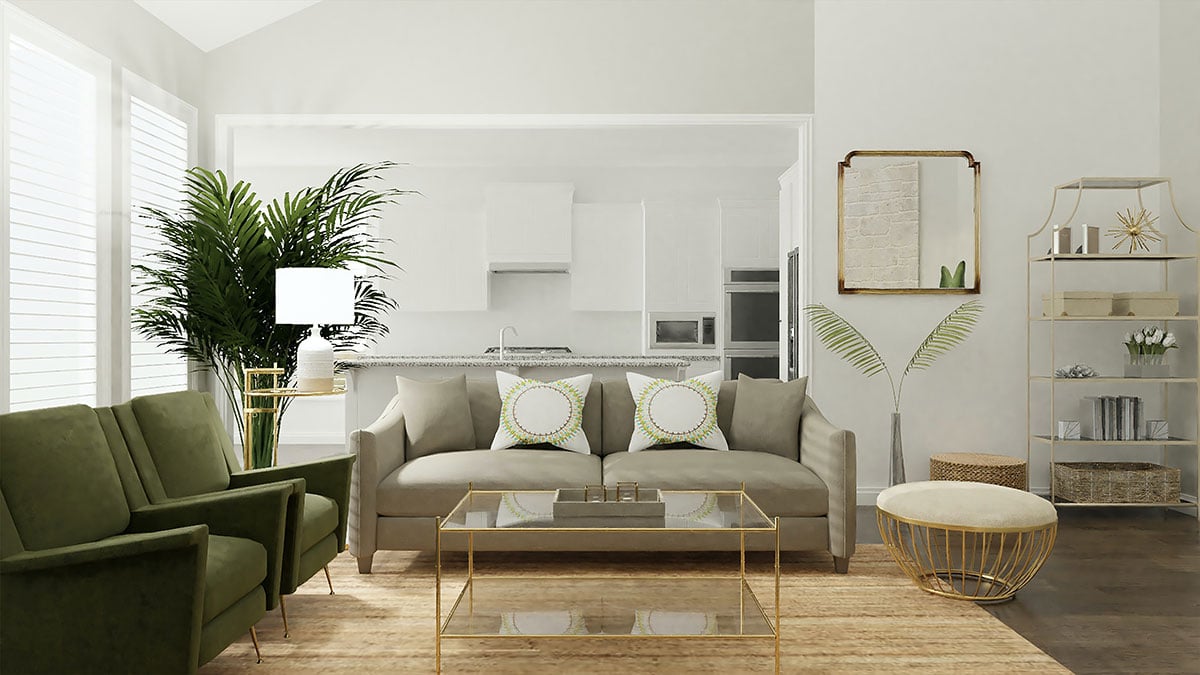
Today, contemporary usually means natural materials, soft curves, and calm neutral tones instead.
Ten years from now, it will almost certainly mean something else again.
That’s just the nature of the word. It was never meant to sit still.
What Contemporary Furniture Looks Like Right Now
A few features keep showing up in furniture labeled “contemporary” today.
Curved shapes. Rounded sofa arms and curved dining chairs are replacing the sharp, boxy edges that dominated a decade ago.
Natural materials. Oak, rattan, and stone are common again, often left with visible grain or texture instead of sanded smooth.
Mixed materials. Wood paired with metal, or stone paired with glass, within a single piece rather than one material throughout.
Earthy colors. Warm taupe, sage green, and soft cream have replaced the stark white and black of a few years back.
None of these are permanent rules. They’re simply what’s trending right now, and trends move on.
Contemporary vs Modern Furniture: The Difference That Trips People Up
This comparison confuses more shoppers than any other in furniture.
Modern furniture refers to one specific design era, roughly the 1920s through the 1950s.
Think Eames lounge chairs or Le Corbusier sofas. That look is frozen in history, permanently.
A genuine modern reissue looks the same today as it did in 1955.
Contemporary furniture has no fixed era. It simply tracks today’s taste.
A contemporary sofa bought this year may already look noticeably different from one bought five years ago.
If you want a piece that stays recognizable for decades, modern is the safer bet.
If you want your home to feel current right now, contemporary makes more sense.
Contemporary vs Minimalist: Are They the Same Thing
Not quite, though the overlap is real and understandable.
Minimalism is a fixed philosophy. Strip everything down. Keep only what earns its place.
Contemporary is simply “whatever’s in style now,” and right now that happens to favor clean, minimal shapes.
That overlap is exactly why people mix the two terms up so often.
But contemporary furniture can absolutely include bold color or decorative detail if that trend returns.
Minimalism, by its own definition, never can.
How Different Spaces Actually Use Contemporary Furniture
Homes. Living rooms and bedrooms lean contemporary when owners want the space to feel updated rather than stuck in a past decade.
Offices. Contemporary desks and seating signal a company that feels current, which matters more than people assume in client-facing spaces.
Hotels and restaurants. I’ve noticed boutique hotels lean hardest into contemporary design, since guests associate the look with quality and attention.
Retail stores. Contemporary fixtures help a shop feel current instead of dated, which affects how customers perceive the products on the shelves.
The goal in every case is the same: feel like “right now,” not “a few years ago.”
Should You Actually Buy Contemporary Furniture
It depends on what you’re optimizing for, and it’s worth being honest with yourself about that.
If you want furniture that stays fashionable for decades, contemporary is a riskier choice than a recognized classic style.
Trends shift, and today’s popular curve or color may look dated within ten years.
If you’re comfortable updating pieces every several years, contemporary works well.
It’s an honest style, in a sense. It never pretends to be timeless in the first place.
Smart Buying Tips for Contemporary Furniture
These are the rules I’d actually follow, not just generic advice.
Buy big, expensive pieces in more neutral shapes. Sofas and beds should avoid extreme, trend-specific silhouettes, since those are the most expensive to replace.
Save bold trends for small items. Accent chairs, lamps, and side tables are cheap enough to swap out once the look changes.
Check build quality before checking style. A trendy curve means nothing if the frame fails in two years, and cheap contemporary pieces fail more often than people expect.
Keep the room consistent. Mixing sharply different styles in one space rarely reads as intentional, even when each piece is nice on its own.
The Future of Contemporary Furniture
Contemporary design will keep shifting the same way it always has.
Sustainability is becoming a bigger influence, with recycled and responsibly sourced materials showing up more in what’s considered current.
Smart furniture, like built-in charging ports or adjustable frames, is slowly working its way into what “contemporary” means too.
The core idea won’t change, though. Contemporary will always mean “right now,” whatever that looks like next.
Final Thoughts
Contemporary furniture isn’t a fixed style. It’s closer to a mirror, reflecting whatever taste is dominant this year.
That makes it flexible and easy to love in the moment.
It also means it will eventually shift into something else, the way my aunt’s black lacquer set eventually did.
Buy well-made pieces, keep bold trends to smaller items, and your space will feel current without needing a full redo every few years.
Frequently Asked Questions
Is contemporary furniture the same as modern furniture? No. Modern refers to a fixed design era from the 1920s to 1950s. Contemporary simply means whatever is currently trending, and it changes over time.
Does contemporary furniture go out of style fast? Faster than classic styles like mid-century modern, yes. That’s the tradeoff for a look that feels current today.
Is contemporary the same as minimalist design? Not exactly. Minimalism is a fixed philosophy built around simplicity. Contemporary just follows today’s trends, which currently lean minimal but won’t always.
Can I mix contemporary furniture with other styles? Yes, and most real homes do exactly that. Just keep materials and proportions consistent so the room feels planned rather than randomly collected.
What materials are common in contemporary furniture today? Natural materials like oak, rattan, and stone are common right now, often paired with metal or glass accents for contrast.